


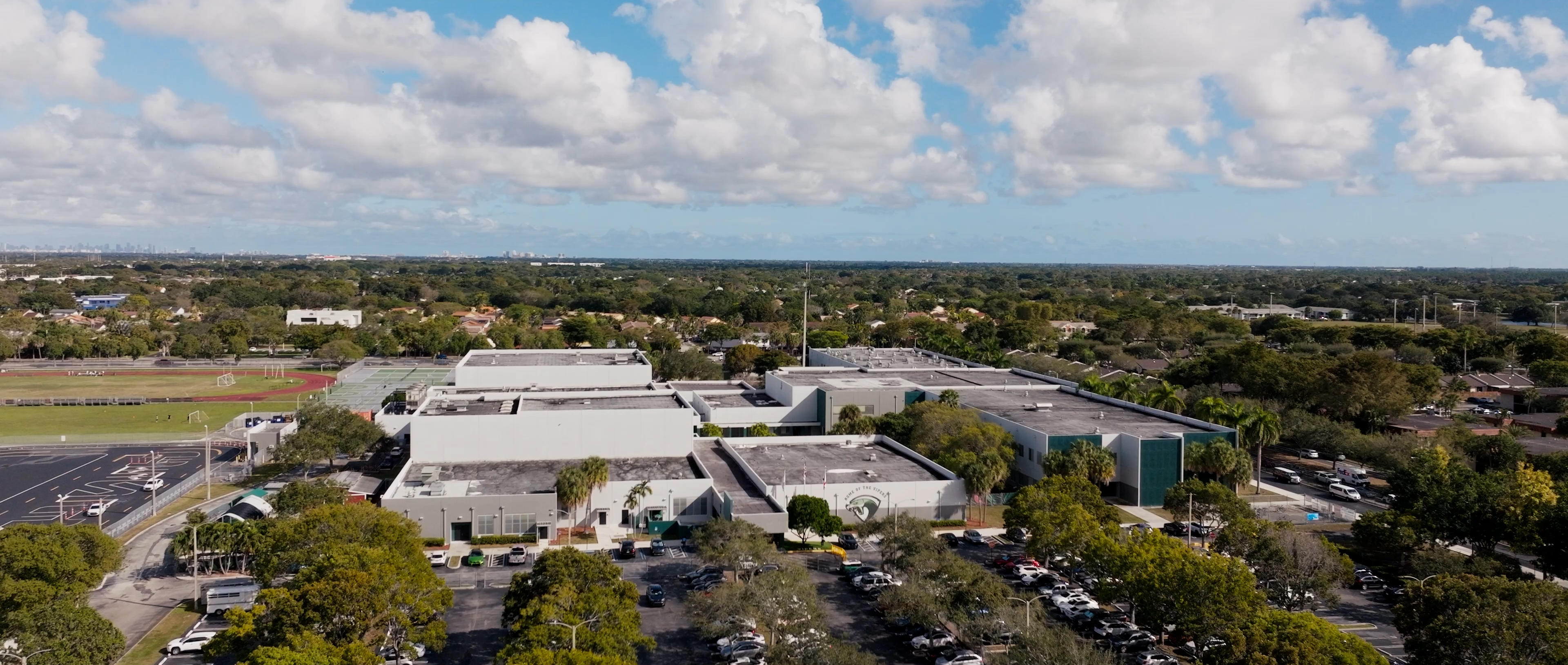
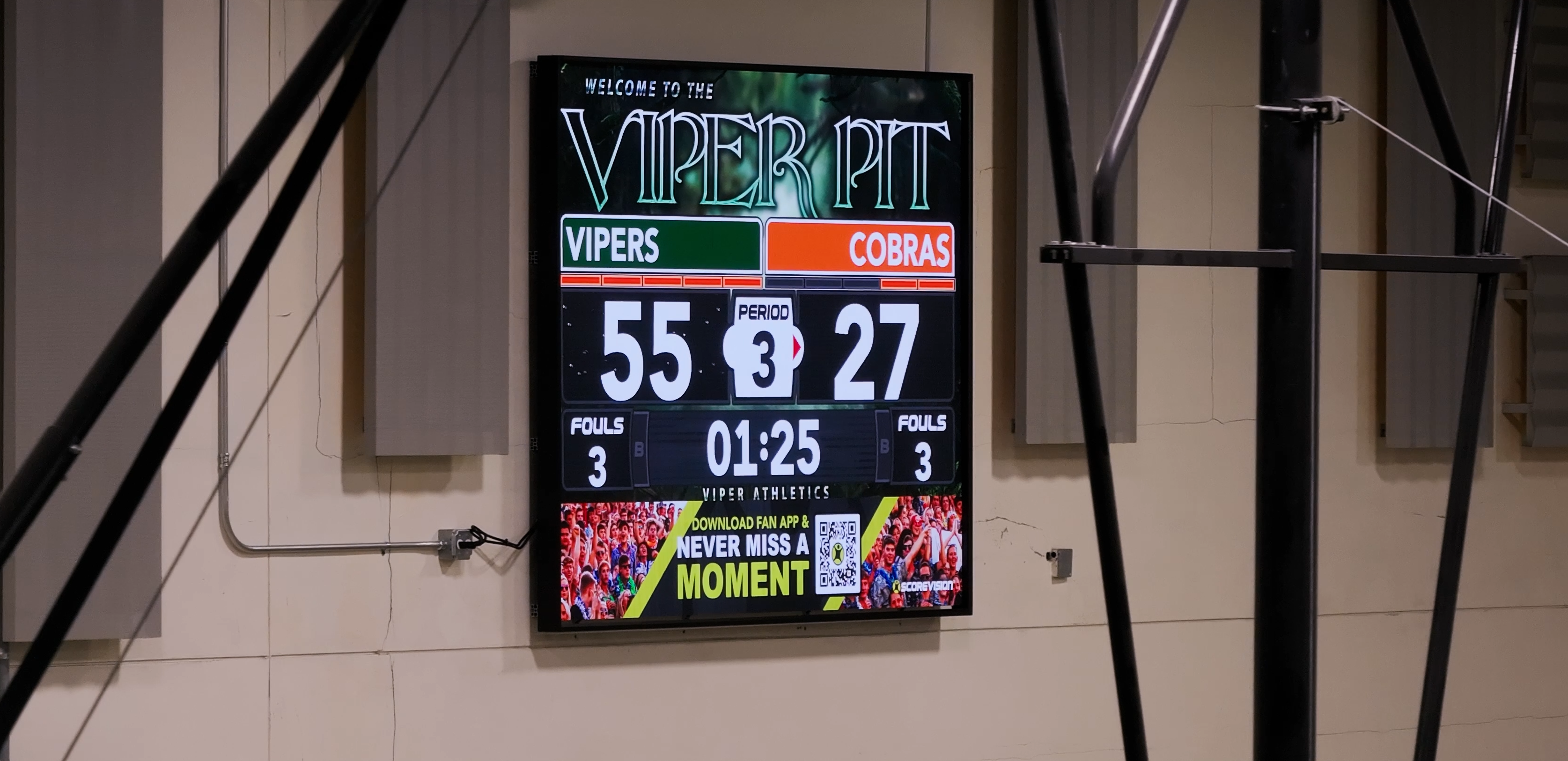
The answer is yes—many high schools can get a professional video scoreboard by pairing an LED video display with scoreboard software. Felix Varela High School in Miami did exactly that, using ScoreVision to display scores, sponsor ads, and hype graphics; they found an LED video display distributor that fit their budget better.
Athletic Director Ryan Schneider and the staff at Felix Varela sat down with ScoreVision to discuss their most recent upgrade and how it has shaped their approach to community engagement.
What is a Software-Only Scoreboard?
A software-only scoreboard is scoreboard software that runs on a display you choose, rather than software bundled with a specific manufacturer's hardware. The display is usually an LED video display or TV, instead of fixed numbers that light up. Separating the software from the display lets schools choose hardware based on price and fit, then add the scoring and production tools they need.
How Much Does a High School Scoreboard Upgrade Cost?
It varies by project. Indoor scoreboard projects can cost anywhere from $20,000 to $150,000 or more per display, depending on the infrastructure upgrades required (power and data runs), the display product, and installation labor. Felix Varela made it work by choosing a display vendor that fit their budget, then bringing in ScoreVision to turn that display into a professional scoreboard.
Sponsorships can also help offset the investment. Because a video scoreboard can run sponsor ads between plays, during timeouts, and before games, many schools sell ad placements to local businesses to help recover costs over time.
To the school's leadership, the investment was worth it to stay competitive in Miami's increasingly difficult education landscape. "When you are in a competitive state, which we are, you need to provide optimum programs and optimum academic opportunities for students. If we don't do that, we lose, and I'm not the type of guy that likes to lose," said Principal Adrian Sanchez. They believe investing in new gymnasium technology helps them stay in the fight for student retention and recruitment.
Why did Felix Varela Choose ScoreVision?
Felix Varela purchased their displays from an LED display vendor, but when it came time to choose software that could show scores, media, and advertising, they felt ScoreVision was the best option from the start. It wasn't just the software that sold them. It was the customer experience.
"I did my first training with ScoreVision; that, to me, was where it all changed," said Athletic Director Ryan Schneider. "ScoreVision also provided a lot of graphics to start with, so you feel comfortable in the beginning."
Beyond the customer experience, ScoreVision's software helped the school bring excitement back to game day for students, fans, and even coaches. Using player accolades and animations, the school makes the most of its production tools to highlight students and their participation in athletics. On an average game night, one person runs the score and another runs production, both from an iPad.
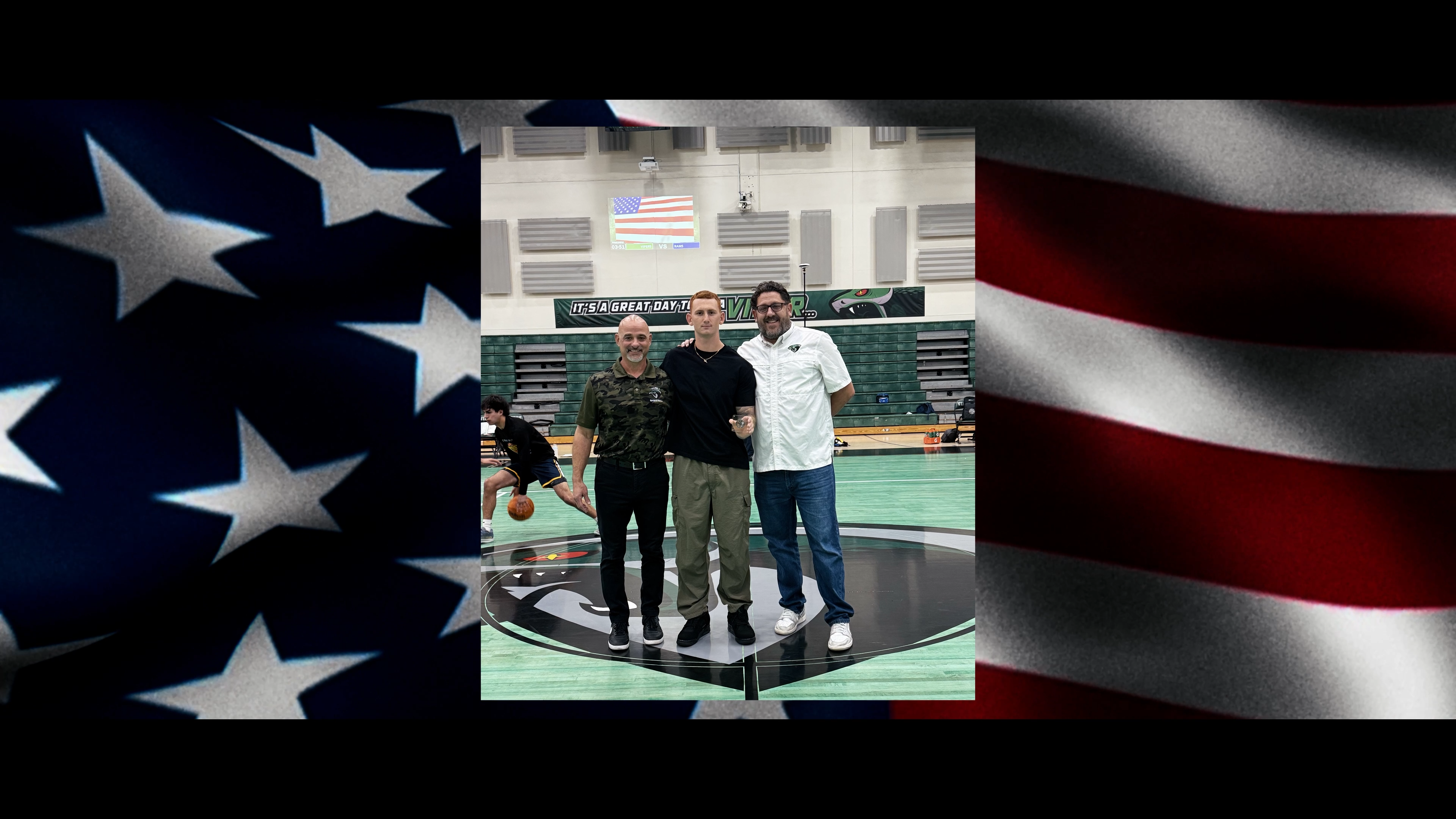
The upgrade proved its worth for Ryan when an alumnus now serving in the United States Marine Corps unexpectedly stopped by a game. The staff created a graphic on the fly and uploaded it to the cloud to play on the scoreboard in his honor. "The former student was so proud and so surprised—you could genuinely tell how much he was worked up," said Ryan.
How does ScoreVision Compare to Other Scoreboard Options?
Many manufacturers provide a controller or control software as part of their hardware package. ScoreVision is one of the few software-only solutions on the market for high schools. Its software works with LED video displays and TVs, giving schools more options when selecting a display that fits their budget.
Other key distinctions include sport-specific scoring interfaces and the ScoreVision Fan App, which gives fans a personalized profile where they can follow live score updates when they're not at the venue.
For a full overview of how ScoreVision compares to other scoreboard options, request a demo.
Frequently Asked Questions
Can scoreboard software work with any LED display?
Software-only scoreboard solutions like ScoreVision are designed to work with a range of LED video displays and TVs, not one manufacturer's hardware. That flexibility lets schools compare display vendors on price, quality, and support. It's still worth confirming compatibility with your software provider before you buy a display.
How long does a high school scoreboard installation take?
ScoreVision installation is quick and easy—our server plugs directly into your display setup. For displays, the timelines depend mostly on the venue. If a gym already has adequate power and data connections, installation can move quickly. If you need new electrical or data runs, plan for extra time and coordinate early with your facilities team so the board is ready before your season starts.
Can sponsor ads help pay for a video scoreboard?
Yes. A video scoreboard can display sponsor ads and commercials throughout a game, which gives local businesses a visible way to support the school. Many athletic departments package scoreboard ads into sponsorship tiers to help offset the purchase and ongoing costs.
Do you need a production crew to run a video scoreboard?
Not necessarily. ScoreVision's Producer app makes it easy for one person, or even a student volunteer, to run game-day production. Good onboarding matters here. At Felix Varela, Ryan Schneider pointed to his first training session as the moment the system clicked.
What's the difference between a traditional scoreboard and a video scoreboard?
A traditional scoreboard shows fixed information such as score, time, and period. A video scoreboard can show all of that plus replays, player graphics, animations, and sponsor content. The scoreboard becomes a tool for fan engagement and recognizing students—it's more than the score.