


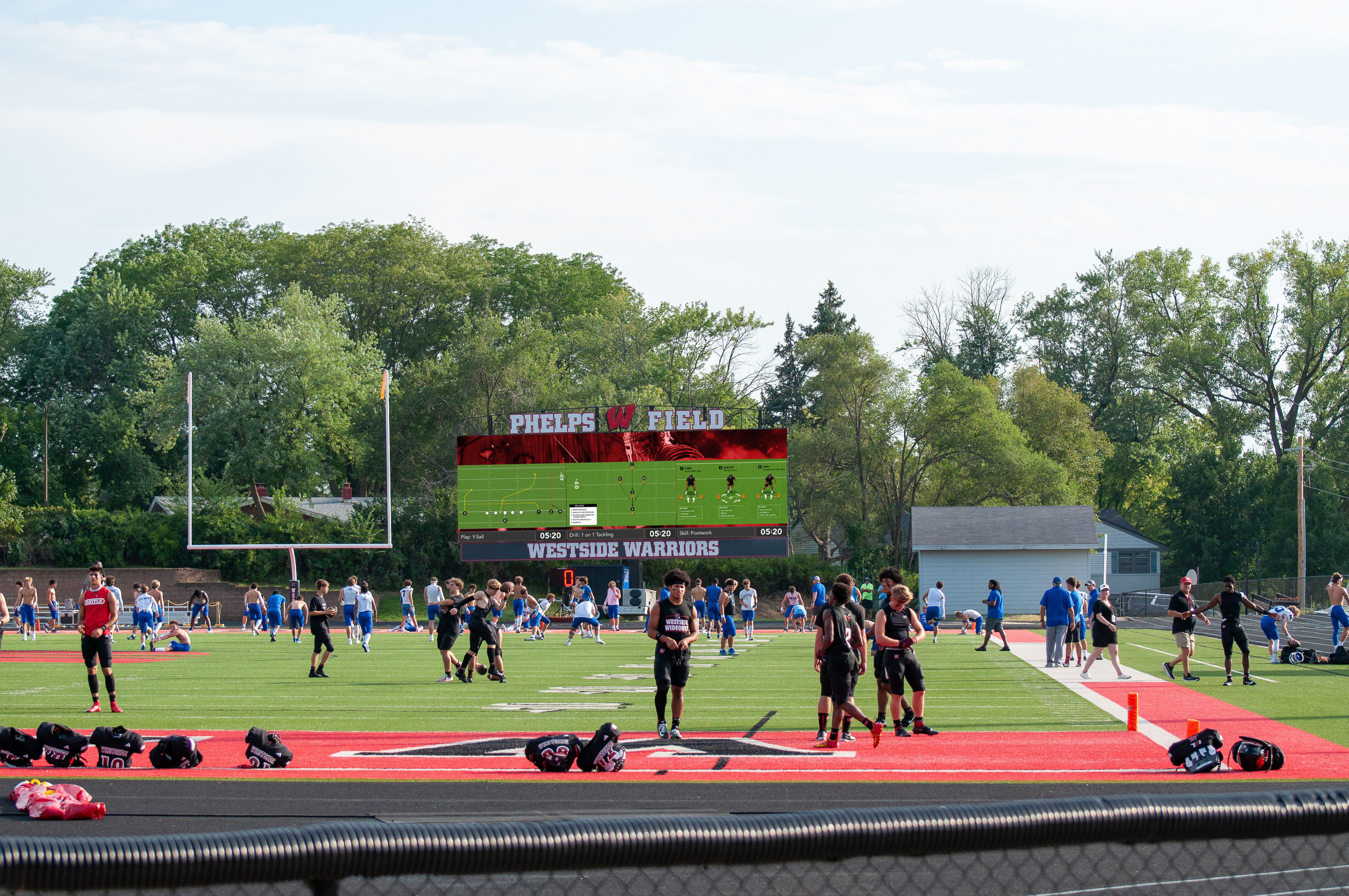
Repetition of skills is the best way to get players to perform—the goal is to get them to do the right thing at the right time, habitually. When coaches are organized and methodical, they give players more opportunities for reps that impact their performance.
Football can be challenging to coach because of the multitude of positions, skills, and plays to work through during practice. That’s why it’s important you stay organized and follow a practice plan that limits transitional downtime between time blocks.
What Makes a Good Practice?
- Set Clear Expectations
- Develop a Practice Plan with Timed Segments
- Simulate Real Game Scenarios
- Leave Time for Review & Reflection
Set Clear Expectations and Intentions
You need to set clear expectations when walking into practice, and one of the best ways is by setting the intent for the day. Get aligned on the goal first, then set the intention for the day by sharing a powerful quote or philosophy—excellence is born out of choice, not talent. Players need encouragement and a reminder. When a workout gets hard, they need to remember their goal to push through.
Develop a Practice Plan with Timed Segments
Next, you need to set the pace of practice. Provide your players with clear direction on stations and rotations at the start of practice. Set your time-based segments or blocks to 15 minutes, divide the team into positions and groups based on the number of coaches you have available, and then get them started.
One of the great tools ScoreVision offers coaches conducting practice is a segmented timer with the option to display media. This tool lets you create your practice plan and set up your timed segments in advance with a description or title to inform the player of the drill or skill being worked during that segment. If you’re working in groups, you can also use the “multi-game” feature to run multiple stations simultaneously on your LED display. Both of these are part of our app-based Production software—so coaches can control them on the field.
Allowing your players to see what they should be working on and how much time is left in the segment will help you transition quickly, giving them more repetitions. It also helps to keep your coaches aligned during practice and on pace.
Simulate Real Game Scenarios
Beyond developing skills through drills, players need experience running real scenarios to prepare before a game. That’s why you review film in the first place! Consider showing a clip of the opponent's game tape to give players context, then set your scoreboard with the game clock and score, to simulate the exact scenario for your players to run through.
Letting your athletes play out the scenario will help them respond quickly and increase the likelihood of success. It enables them to self-scout their games, recognize situations during games, and identify which skill or play is needed to achieve success.
Leave Time for Review & Reflection
It’s a team sport, and you're part of the team as their coach. Allowing your team to review their performance and provide feedback will help them become stronger athletes with better communication, enabling you to make adjustments accordingly. You should encourage your athletes to share their experiences to gauge how they are feeling before the game. It’s your responsibility to make sure they have every opportunity to develop confidence.
It might be helpful for you to share clips with your players after practice. ScoreVision offers a way to capture film on a mobile device called Capture, which is part of our Production software. Simply film a quick drill or play during practice on your phone using the app, then choose whether to save, share, or display it on the LED. Video is one of the most powerful tools for changing how you instruct your athletes.